
Hosted LA Tech Week Event
JFK T4
From retro to future state
Strategy
Research
UX Design

Every flightstarts witha line.since 1948 →
In 2024, a record 27 million people passed through Terminal 4. Check-in, security, customs, the gate: the morning is a chain of waits. The T4 team wanted to know what the terminal could feel like if it were built around the traveler's morning instead of the airport's schedule. This is the research behind that answer.
Seventy-five years of growing pains
JFK opened as Idlewild on a former golf course in 1948. Ever since, the airport has kept outgrowing whatever it just finished building. That's the pressure Terminal 4 lives with every morning.


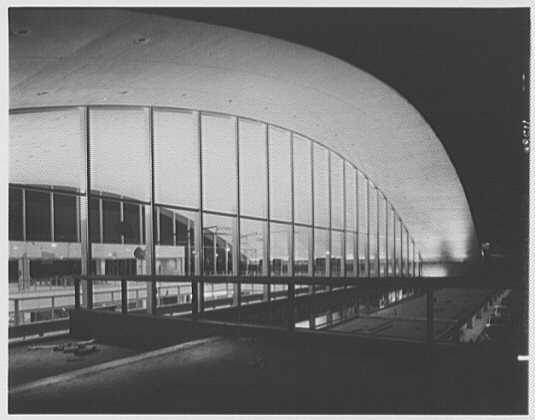

Every era fixed the last era's line, then made a new one.
What the terminal told us
We broke the research into four lenses. Each one started on the terminal floor, watching how people move, wait and spend, and ended with a question we could design against.
Short on time, not on direction.
Most people at T4 know where they're going. What they don't know is how long it will take. The stress comes from not knowing, more than from the distance.
Time in line is money left on the table.
Shops and restaurants keep a terminal running between flights. Someone stuck at security isn't eating, shopping or settling in. And with New Terminal One opening next door, the experience is now the competition.
The 5am problem.
The early departure rush hits before most of the terminal is awake. Lines stack up, the far gates are a real walk, and breakfast rarely fits the time travelers actually have.
The terminal runs on people.
Thousands of employees across airlines, retail, dining and operations keep T4 moving. When it's hard for them to see a way to grow, they leave, and the lines get longer for everyone.
The parental navigators
One persona kept coming up: parents flying with kids. Jordan and Lee, their kid Taylor, an early flight to LA and zero margin for error. We storyboarded their morning to find where the terminal could step in.
The layover explorers
The second persona was the family with time to kill. A connection to Lisbon, a four-hour delay and five people with very different needs. Today, T4 gives them a gate bench. We asked what it would take for the wait to feel like part of the trip.
Two bets on a better T4
The research pointed in two directions: give travelers their time back, and give staff a reason to stay. Each became a concept we visualized for the T4 team.
Shopping Concierge
Turn waiting time into usable time. Travelers order from anywhere in the terminal, including the security line, and pick up on the way to their gate.
Career Coach
A growth path for the people who keep the terminal running, built around their shifts, their goals and the roles T4 actually needs to fill.

We took both concepts to the T4 team in two visual directions, along with a storyboard for each persona, and mapped the next steps for testing them in the terminal.
View the Figma deckA terminal you can read at a glance.
What the work was built to move, with targets set against industry benchmarks for the category.
Retro, meetright now.
Saarinen built a terminal that looked like flight. Our job was smaller and harder: make an ordinary 5am morning at T4 feel a little more like it.
Want to
see more?
Reach out and I’ll walk you through more of my work, including projects for Disney, Wolf & Shepherd, Franklin Templeton, Block One, and JPMorgan.
Reach out to view more of my portfolio work – including projects from Disney, Wolf & Shepherd, Franklin Templeton, Block One, and JPMorgan.

Current availability
We’re open for business and new collaborations.
Current availability
We’re open for business and new collaborations.